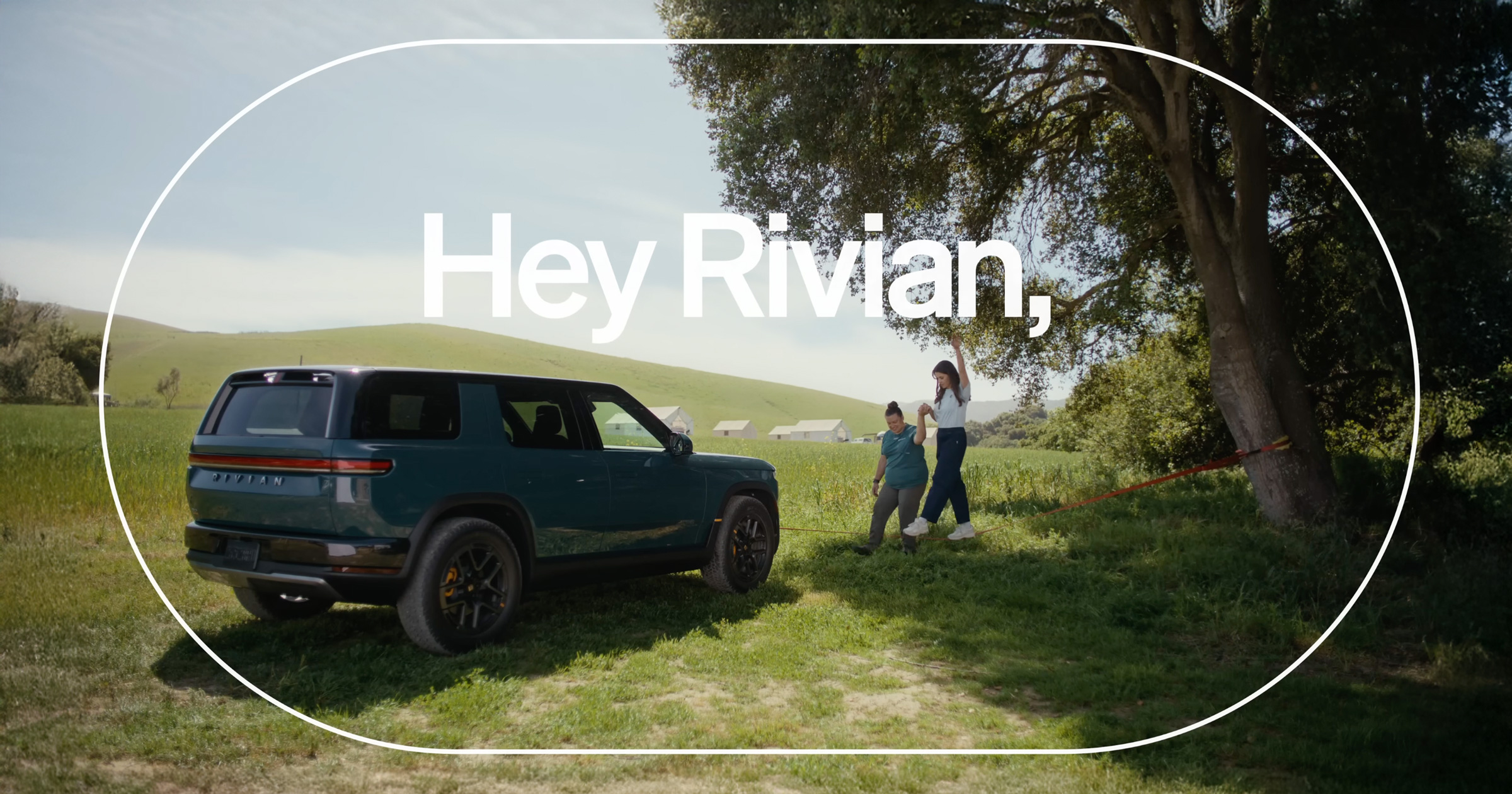
The AI era is marked by big transformation on one side and a lot of window dressing on the other. There aren't many products that are genuinely transformative, and plenty that just bolt AI onto something existing to check the box.
That's not entirely unreasonable — building a transformative product is genuinely hard.
Rivian's Assistant is one of the products that actually clears that bar. Unlike the competition, whose AI integration is mostly skin-deep, this one is built directly into the car's software and hardware, can control core vehicle functions, and helps drivers with a range of tasks.
What we find especially interesting is that a large part of this system is being developed right here in Belgrade.
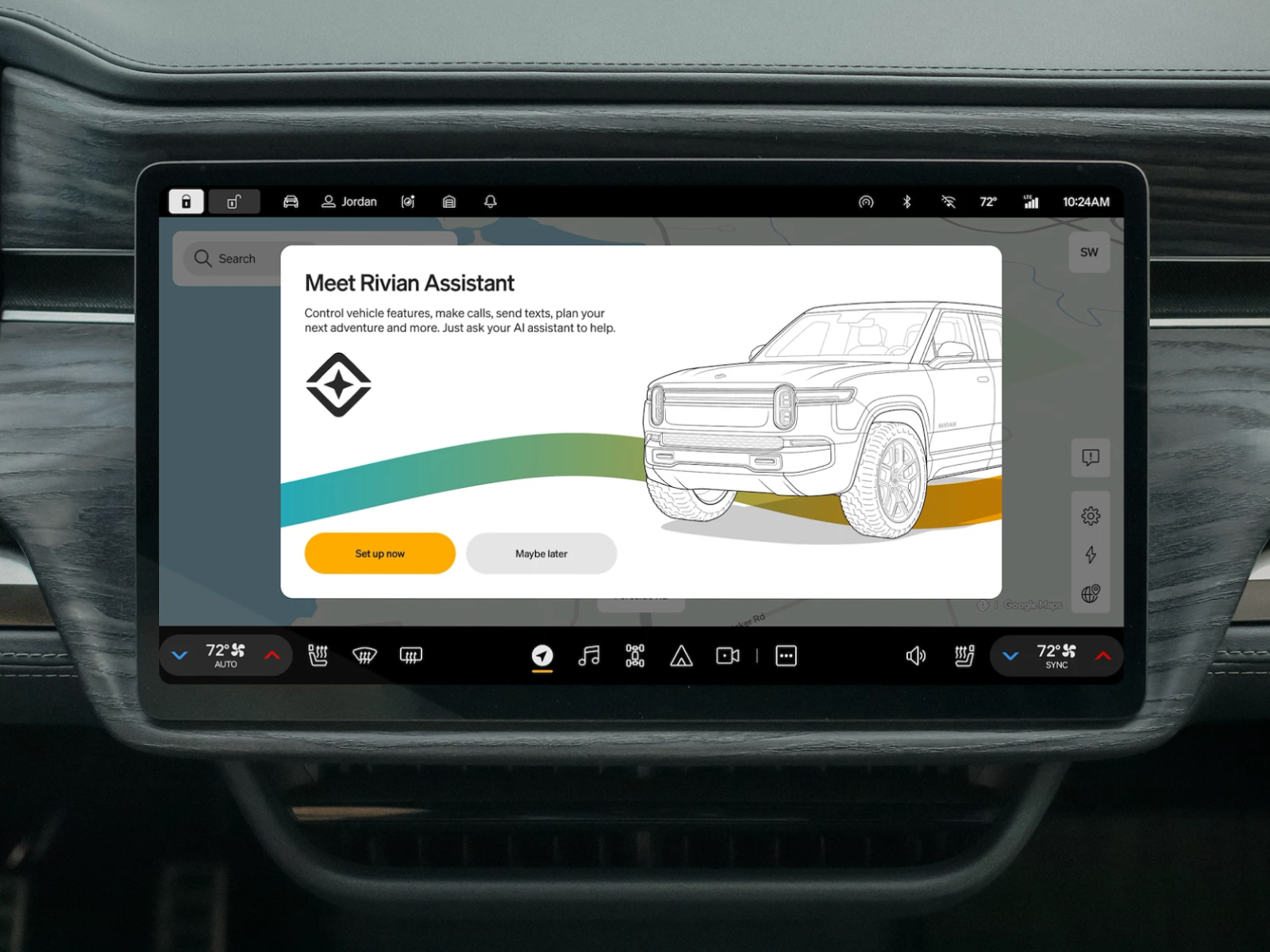
Most in-car AI assistants work roughly like this: you get a chatbot on the infotainment screen that answers questions, maybe starts navigation, maybe plays music. Essentially, it's a language model stuck onto the car's multimedia system, with no access to the vehicle systems under the hood.
Rivian Assistant controls the car itself. Drivers can change drive modes by voice, adjust ride height, open the front trunk, manage the AC, and check range data. Some commands are processed locally in the vehicle, without being sent to the cloud — which means faster responses and better privacy.
The system is grounded in the data of the specific vehicle and the owner's manual, so it can tell you what a particular dashboard warning means. On longer trips it even generates stories for passengers.
Underneath it all is what Rivian calls Unified Intelligence — an orchestration layer with custom language models that understands both the vehicle systems and the driver's personal context. The language model here acts as the brain that makes decisions about the car's physical functions.
The first integration with outside services is Google Calendar. A driver can check their schedule, move a meeting, find a café on the route, and send a message with the new arrival time — all in one continuous flow.
The system chains actions across different services instead of waiting for a separate command at every step.
The assistant learns preferences and stores them per driver profile, with memory off by default.

On the R2, the new SUV model, which ships with 200 sparse TOPS of compute, the local language model runs directly in the vehicle — with no mobile network.
Wassym Bensaid, Rivian's head of software, says it's a far more capable AI platform than the previous R1 could run — here, more complex conversations work even where there's no signal.
A good chunk of what makes this system possible is built in Belgrade.
The team at Rivian and Volkswagen Group Technologies works on edge deployment of the models — the ones that run directly on the vehicle, tied to the infotainment. The cloud models are developed by a team in the US.
Filip Todorović, Sr. Software Engineer, Edge AI at R|V Tech, breaks down the division of work for us:
Part of the development and the actual deployment of the AI models onto the device — edge deployment — happens in Serbia.
These are ML models that run directly in the vehicle and are connected to the infotainment system.
Alongside the cloud models, which cover a large number of functions and are built by the team in the US, our team handles the edge side — what runs locally, on the vehicle.
Getting models to run on the vehicle is one of the toughest problems in machine learning.
Edge AI is considerably harder than deploying models in the cloud. When you work in the cloud, your hands are free — you have far more resources to work with and you can scale easily.
But when you're working with a vehicle and the limited resources on the board itself — especially with cars that are already in production — you have to adapt to whatever is currently available across the fleet.
The biggest challenge is how to make a model lean enough to run on an edge device: how to restructure it, quantize it, and shrink its size.
Sometimes that comes at the cost of a small drop in output quality.
Our engineers' job is exactly to find the best tactics and squeeze out the maximum performance within what the platform allows.
Rivian is now moving off Alexa, Amazon's product, to its own stack. Filip describes the reasons and what that deeper hardware integration brings:
Rivian wanted more control and deeper integration with the vehicle in order to give users the best possible experience.
We've been working on this project for two years now — it's a big undertaking, but it lets us build in our own, in-house environment and keep more control.
Deeper hardware integration means you can also control functions by voice that other vehicles don't have or charge extra for — for example, the view from the camera pointed at the cargo area.
The idea is for the whole experience to center on the user — for Rivian Unified Intelligence to learn your habits over time and earn your trust.
Rivian / Rivian and Volkswagen Group Technologies has a lot of open positions in Belgrade, across different teams.
AI Hub is supported by